A median only means something when the things being measured are similar enough to average together. In Ferndale, they aren't. Ask two different data sources what a house costs there and you'll get two different towns. One widely used national listings platform put Ferndale's median sale price at $555,000 as of October 2025, up 16.8 percent year over year, the most recent clearly dated figure of that kind available. A separate local listings feed, last updated in May 2026, showed just 17 active listings with an average price of $1,396,224 and an average size of 3,139 square feet, nearly double the Humboldt County average of 1,807 square feet. Those aren't two readings of the same market a few months apart. They're two different housing stocks getting folded into one number.
That gap is the real story for anyone comparing Ferndale to other Humboldt towns before they buy. The number that matters isn't the median. It's which side of a specific line a given house falls on.
Two towns, one zip code
Ferndale's downtown sits inside the Main Street Historic District, listed on the National Register of Historic Places on January 10, 1994. The district covers 46 acres and includes 39 contributing buildings plus one contributing object, the Town Clock. The city itself carries an older designation too: California State Parks named it a State Historic Landmark in 1975, years before the federal listing followed.
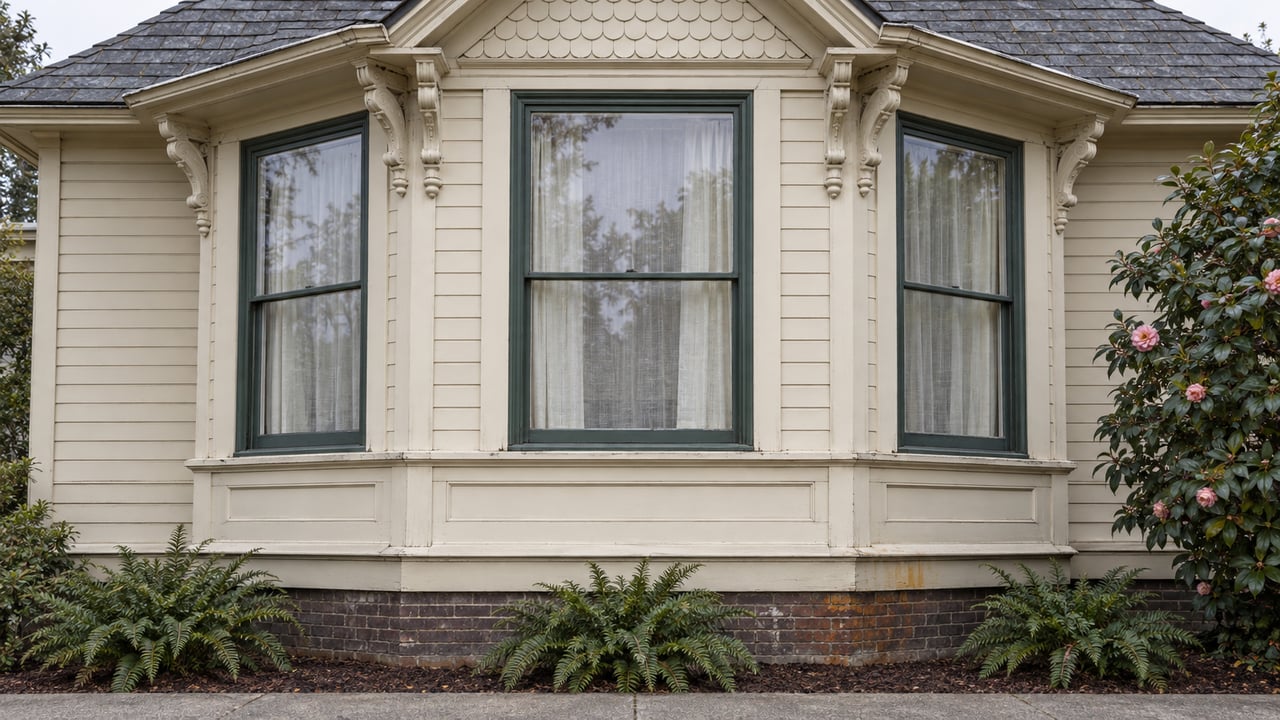
The architecture inside that 46-acre boundary splits into two distinct eras: Victorian-period buildings from 1880 to 1890, and early Modern buildings from 1920 to 1936. Architect T.J. Frost's Eastlake-Stick style buildings are especially well represented downtown, alongside Italianate, Queen Anne, Neo-Classic, Bungalow, and Mission styles. A handful of individually designated landmarks sit outside the district boundary but still carry their own protected status, among them the Shaw House, the Berding House, the Catholic Church of the Assumption Rectory, the Ferndale Public Library, and the Alford-Nielson House.
Outside that footprint, Ferndale has ordinary hillside and countryside homes. Those two categories, contributing historic structure and everything else, are what's actually driving the price spread that shows up as market noise in the aggregated numbers. A buyer comparing "Ferndale" to "Fortuna" or "McKinleyville" on price per square foot is comparing a blended average of two different regulatory environments to towns that mostly have one.
| What was measured | Figure | When |
|---|---|---|
| Median sale price, national aggregator | $555,000 | October 2025 |
| Active listings, national aggregator | 23 homes | August 2026 |
| Active listings, local brokerage feed | 17 homes, avg. $1,396,224, avg. 3,139 sq ft | May 2026 |
None of these figures contradict each other so much as they describe different slices of a very small inventory. With active listing counts sitting in the low twenties at most points this year, a single hillside property with acreage can move the average by six figures. That's not a market being volatile. That's a market too thin to average meaningfully.
What the district actually requires
The city's own design review process is straightforward to describe and easy to underestimate. Ferndale's Planning Commission oversees modifications to historic and design-controlled buildings through a permit process. According to the City of Ferndale, property owners inside those zones must apply for a permit and receive approval before any outside changes are made to the property. The Commission meets the first Wednesday of each month at 6:00 p.m. in the Ferndale Town Hall Lounge at 834 Main Street. Miss that meeting cycle and the next opportunity is a month away.
The city has also written this preservation priority into its General Plan rather than treating it as a side ordinance. Ferndale's Historical and Cultural Resources Element sets goals and policies specifically for protecting the town's architectural character, a step the city notes isn't mandated under state planning law but one that 126 California jurisdictions have taken on their own. That detail matters for a buyer's expectations. This isn't a quirky overlay someone forgot to update. It's a standing policy commitment the city built into its long-range planning.
None of this is a reason to avoid a downtown Victorian. Ferndale's preserved storefronts and residences are recognizable enough that Legoland California recreated the town in its Miniland section in 1995, the only small American town represented there alongside New York, San Francisco, and Las Vegas. The same character that makes the town recognizable from a theme park replica is the character the district exists to protect, and protecting it comes with a process.
What to ask before you write an offer
For a buyer weighing a Ferndale property against something in a neighboring town, a short list of questions does more than any median price:
- Is the property inside the Main Street Historic District boundary, or is it one of the individually designated landmarks outside it?
- Is it a contributing structure to the district or a non-contributing one?
- Has any prior exterior work on the property gone through Planning Commission or design review approval? Unpermitted exterior changes can surface as a problem during your own future renovation, not just at the time they were made.
- If you're planning exterior work, have you built the Commission's monthly meeting schedule into your renovation timeline?
- Does the county's average price per square foot even apply here, given how much larger the average countryside listing tends to run compared to an in-town Victorian?
FAQ
Does the historic district affect interior remodeling too? Check with the city before planning interior work to find out what approvals apply.
If a house isn't inside the district, does that mean no review at all? Check with the city about what review applies to a specific property.
Why do a handful of properties swing the average so much? With active listings in Ferndale running in the low twenties most of this year, a single large countryside or hillside sale can shift the reported average by a wide margin. A town this size doesn't generate enough transactions in a given month to smooth that out.
Ferndale rewards buyers who ask the district question early, not the ones who assume a median price tells them what a house will cost to own. If you're weighing a Ferndale property against another Humboldt town and want a straight answer on what a specific address requires, reach out to Kyla Nored and The Land Man Office before you write the offer, not after.
This article is general information, not legal, tax or financial advice. Consult a qualified professional about your situation.