By The Land Man Office
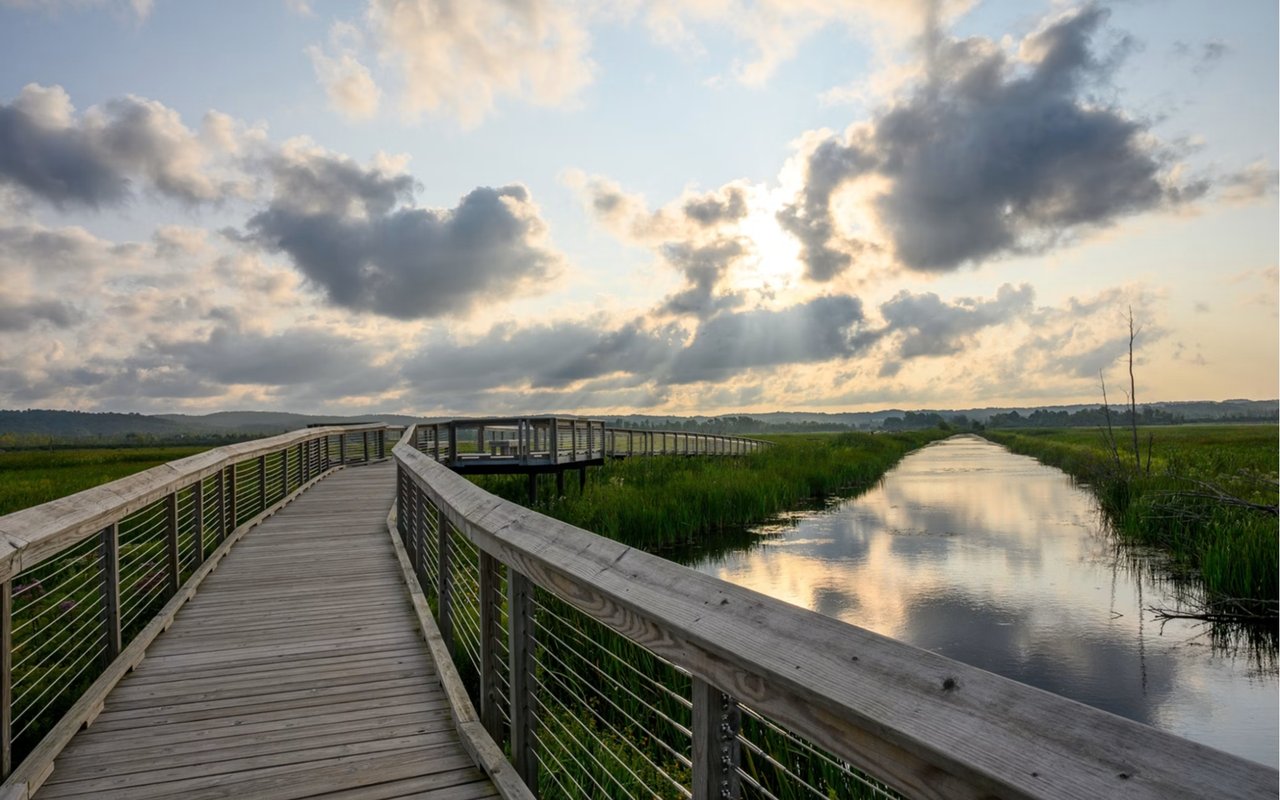
The Arcata Marsh & Wildlife Sanctuary offers one of Humboldt County's most unexpected success stories, a place that treats the city's wastewater while doubling as a genuine sanctuary for hundreds of bird species. Few destinations blend environmental engineering and outdoor recreation quite this seamlessly. Here's what to know before spending a day at the Arcata Marsh.
Key Takeaways
- The 307-acre sanctuary sits on land that served as a log deck, an oxidation pond site, and eventually a landfill before its dedication as a wildlife sanctuary on July 4, 1981.
- The marsh functions as a working wastewater treatment facility, using enhancement marshes and oxidation ponds to naturally filter the city's sewage before it reaches Humboldt Bay.
- More than 300 bird species use the sanctuary, thanks to its location along the Pacific Flyway, a major migratory corridor for birds traveling between the Arctic and Central and South America.
- The sanctuary includes roughly five miles of walking and biking trails, along with an Interpretive Center offering free maps, exhibits, and a log of recent bird sightings.
From Landfill to Wildlife Sanctuary: A Remarkable Transformation
The land beneath today's peaceful trails has a considerably rougher history than most visitors realize. Before it became a sanctuary, this same ground served as a lumber storage yard, a wastewater pond, and eventually the city's dump.
How This Site Actually Changed Over Time
- Up until 1903, most of the area remained tidal marshland before industrial uses began to take over
- In 1945, the section now known as the George Allen Marsh served as a log deck for storing lumber, and by 1965 the site had been diked off and converted into a landfill
- By 1973, leachate problems and public health concerns threatened to close the landfill entirely, with the surrounding area supporting little more than rats, feral cats, and thousands of gulls
- Rather than commit to a costly regional wastewater treatment plant, Arcata chose to restore the marsh, ultimately dedicating the Arcata Marsh & Wildlife Sanctuary on July 4, 1981
This transformation from an unofficial dump nicknamed "Mt. Trashmore" into an award-winning sanctuary remains one of the most remarkable environmental turnarounds on California's North Coast.
How the Marsh Doubles as a Working Wastewater Treatment Plant
What makes the Arcata Marsh genuinely unique isn't just its wildlife. It's that the sanctuary actually functions as the city's active wastewater treatment system, built around natural rather than purely mechanical processes.
How This System Actually Works
- Wastewater first passes through conventional treatment before flowing into oxidation ponds covering nearly 55 acres, where sunlight and algae help break down organic material
- The partially treated water then moves into enhancement marshes named after George Allen, Bob Gearheart, and Dan Hauser, three key figures behind the project, covering roughly 31 additional acres
- Plant roots and stems within these marshes filter the water further, removing nutrients before the treated water is released into Humboldt Bay
- This integrated approach helped Arcata meet the Clean Water Act's requirement that any wastewater discharged into a bay must "enhance" rather than harm it
The project has since earned recognition, including an Innovations in Government award from the Ford Foundation and Harvard Kennedy School, and continues to serve as a model studied by cities around the world.
What to See on a Visit: Trails, Wildlife, and the Interpretive Center
Beyond its function as a treatment facility, the marsh offers a genuinely rewarding visitor experience. Roughly five miles of trails wind through a landscape that shifts from freshwater marsh to salt marsh to open mudflats.
What to Look Out for While You're There
- The sanctuary's location on the Pacific Flyway makes it a major stopover for migratory birds, with more than 300 species recorded here over the years
- Brown pelicans are commonly spotted diving into Klopp Lake, one of several ponds within the sanctuary named for early supporters of the project
- Dragonflies and swallowtail butterflies are common sights along the trails during warmer months, alongside garter snakes sunning themselves on the paths
- The Arcata Marsh Interpretive Center offers free maps and brochures in both English and Spanish, along with interactive exhibits and a running log of recent bird sightings
Bringing a pair of binoculars and a bit of patience tends to make the biggest difference in how much wildlife you actually spot during a visit.
Practical Tips for Visiting
A little planning helps make the most of a trip to the marsh, especially since its hours and amenities differ slightly from a typical city park. The sanctuary remains free and accessible to the public year-round.
What to Know Before You Go
- The sanctuary is open from sunrise until one hour after sunset, with no admission fee required
- A beach wheelchair is available to check out for visitors who need it, making the trails more accessible
- Friends of the Arcata Marsh, a nonprofit formed in 1989, continues to support habitat restoration and trail maintenance through community donations
- Checking the Interpretive Center's bird sighting log before heading out can help you know what's currently being spotted around the sanctuary
Visiting during early morning hours tends to offer the best combination of wildlife activity and quieter trails, especially during peak migration seasons.
Frequently Asked Questions
Is the Arcata Marsh & Wildlife Sanctuary free to visit?
Yes. The sanctuary is open to the public at no cost, from sunrise until one hour after sunset.
Why does a wastewater treatment facility double as a wildlife sanctuary?
Arcata's engineers designed the marsh to naturally treat the city's wastewater while meeting the Clean Water Act's requirement that discharge into a bay must enhance rather than degrade it, creating genuine wildlife habitat in the process.
What's the best time of year to see migratory birds at the marsh?
Migration seasons in spring and fall typically bring the greatest variety of bird activity, given the sanctuary's location along the Pacific Flyway.
Find Your Place Near Arcata's Natural Wonders
As Northern California specialists, we at The Land Man Office are dedicated to finding your perfect property in rural Northern California. Our agents have spent their careers living, working, and playing throughout this region, specializing in residential, investment, timber, and recreation properties. Together, we bring the knowledge to address the full spectrum of your real estate needs, focused on an intimate, personalized, and creative experience with the highest level of service for every client. If Humboldt County's natural beauty and community spirit have you thinking about your next move, we would love to help.
Connect with The Land Man Office today.
Connect with The Land Man Office today.